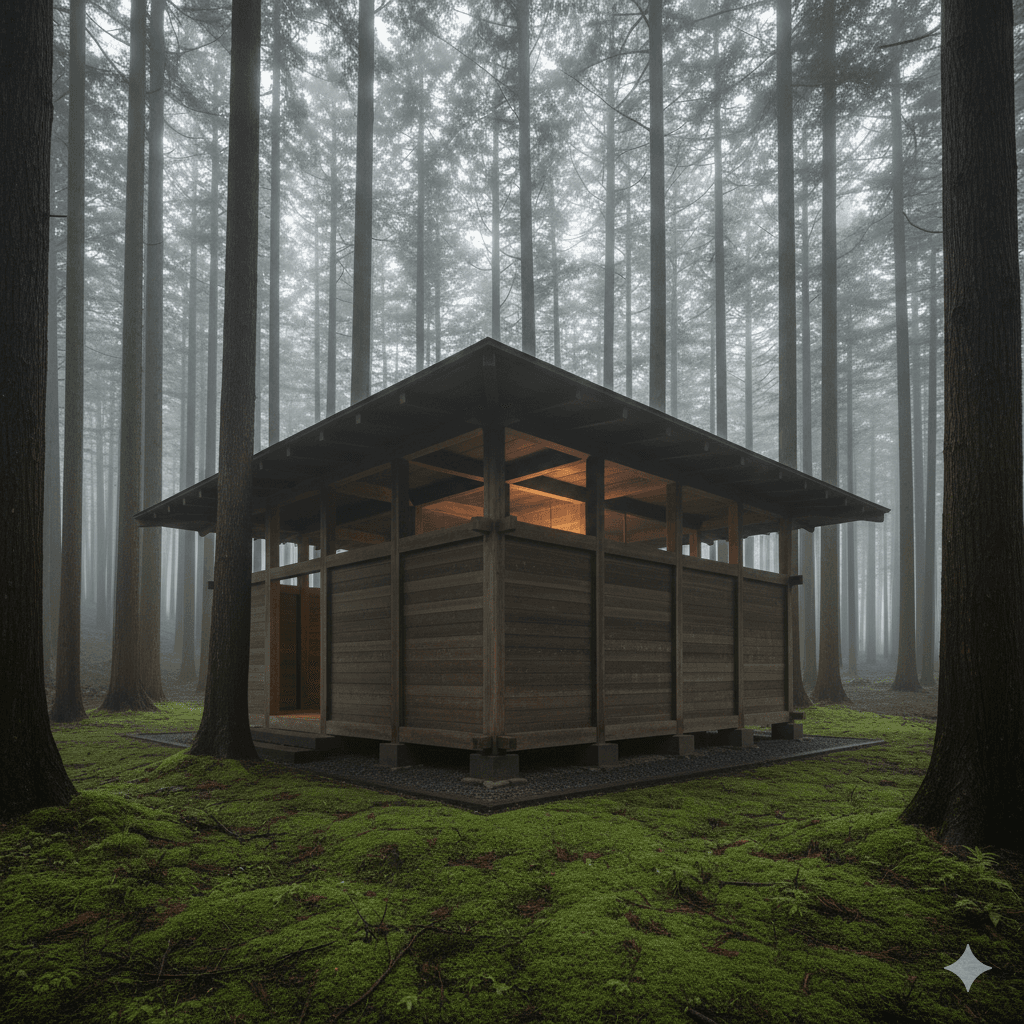
Forest Pavilion
Design Ethos
A meditation on impermanence. The Forest Pavilion sits lightly on the mossy floor of a Kyoto cedar forest, its timber structure referencing traditional joinery while pushing the boundaries of modern engineering. The boundary between inside and outside is dissolved, inviting the scent of pine and the sound of rain to become part of the architectural experience.
Client
Private
Area
120 sqm
Year
2023
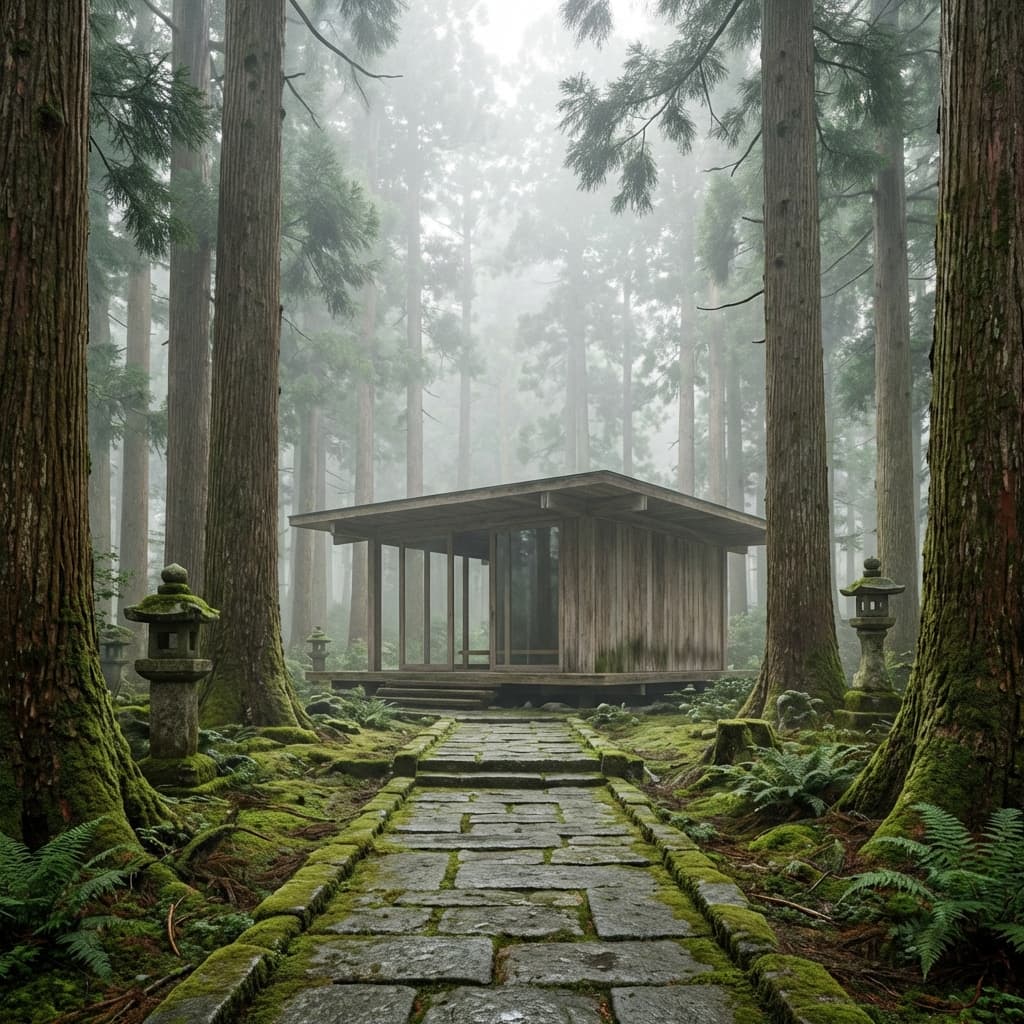
The journey begins on a winding stone path, cutting through the dense mist of the ancient cedar forest. The pavilion emerges not as an imposition, but as a whispered response to the landscape. We selected local Sugi (Japanese Cedar) for the exterior cladding, allowing the structure to silver over time and disappear into the vertical rhythm of the living trees.
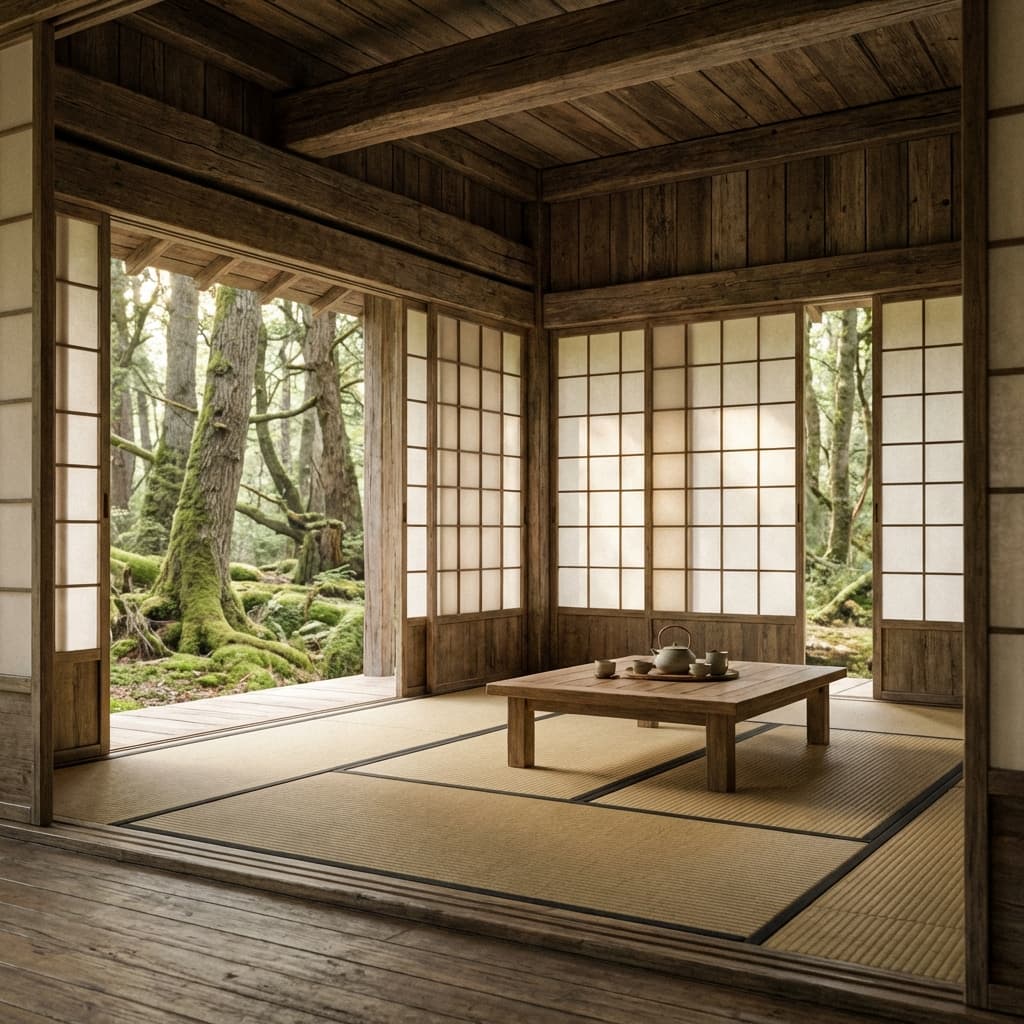
Inside, the architecture dissolves. The tea room is a study in reduction, comprised only of tatami mats, shoji screens, and the view itself. By removing all visual noise, the focus shifts entirely to the play of light and shadow. The scent of fresh rush grass from the mats mixes with the damp earth outside, engaging all senses in the ceremony of tea.
The soul of the pavilion lies in its connections. We utilized Kigumi, the traditional art of Japanese joinery, to assemble the structural timber frame without a single nail or screw. This interlocking method allows the wood to expand and contract with the seasons, a living dialogue between the material and the atmosphere. Each joint is a testament to the hand of the craftsman.